
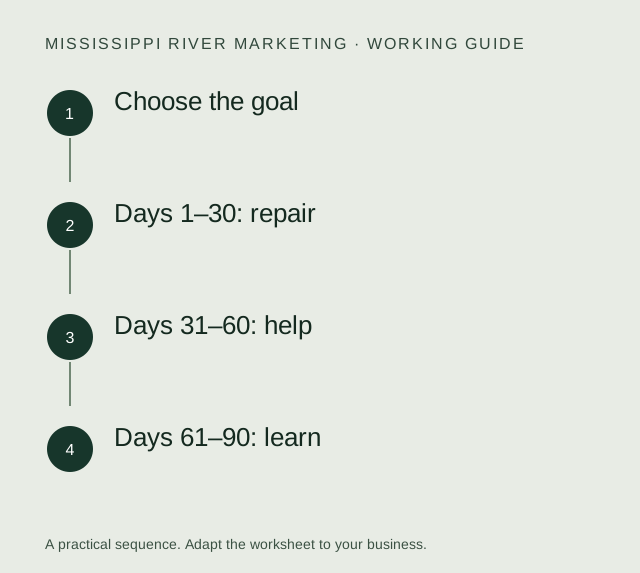
Before day one: choose a goal the operation can support
Choose a service, product category or booking period with room for additional business. Define who is a suitable customer and where you can serve them. For a company working across Southeast Missouri and western Kentucky, include travel and scheduling reality in that choice. More requests from outside a workable area can create expense instead of growth.
Set a business goal using your own baseline and capacity. Avoid borrowing a target from another company's case study. If current inquiry records are incomplete, make reliable measurement the first milestone. Write down the staff time and money you can commit, who approves public content and who answers new requests. A plan without those owners usually turns into unfinished tasks.
Days 1–30: repair the path from discovery to contact
Review the main service page on a phone. Make the offer, coverage, process and next step easy to understand. Correct obsolete hours, disconnected contact details and expired promotions. Test the form from submission through inbox receipt, then check the phone link and the team's response process. Record the outcome so future changes can be tested against it.
Create a baseline with exact date ranges. Save relevant search clicks, available website activity and inquiry counts, keeping each metric's definition intact. List the common questions customers ask before buying. Choose the three gaps most likely to prevent a suitable inquiry and fix those before expanding the site. Google Search Essentials emphasizes useful content and accessible links; a long page inventory alone is not a search strategy.
Days 31–60: publish a small set of useful answers
Turn real customer questions into two or three focused resources. A retailer could explain compatibility and measurements. A contractor could show preparation requirements and the boundaries of an estimate. An outfitter could provide a packing or booking checklist. Use your own knowledge and permitted photographs, and label estimates or hypothetical examples clearly.
Each article should help the reader do something. Add an original checklist, comparison table, worksheet or annotated process illustration. Connect the answer to the relevant service page without forcing an inquiry before the reader gets value. Publish less if that is what the owner can verify and maintain. Repeating the same article with different town names does not add local knowledge.
Ask for genuine customer feedback through an appropriate, consistent process and respond helpfully where suitable. Keep the business profile aligned with the website. Collect new project evidence with permission while the work is fresh, including the question it answers and any limitation. This makes future content easier to produce without inventing claims.
Days 61–90: test one opportunity and close the loop
Review the first sixty days before adding another channel. Are suitable people finding the offer? Are inquiries reaching the team and being answered? If the fundamentals work and there is capacity, choose one limited opportunity: a targeted advertising test, a relevant community partnership or an improvement to a page already attracting useful searches. Assign a budget or time limit and a review date.
Do not change the offer, audience, page and follow-up process all at once if you want to learn which change helped. Keep a short decision log. Record what you changed, why, the evidence available and what you expect to observe. This will not establish perfect causality, but it prevents repeatedly making changes without remembering the reason.
End with a decision, not a longer task list
At the final review, compare completed periods and explain seasonal or operational differences. Separate activity from outcomes: articles published are work completed; qualified inquiries and booked work are business evidence. Search growth can be encouraging without proving sales. Include what failed, what remains uncertain and what the team learned about customer questions.
Choose what to continue, improve or stop for the next ninety days. Keep useful pages accurate and maintain the contact route even if a campaign pauses. Use the downloadable plan to give every task one owner, a deadline and observable completion evidence. A smaller plan that the business can carry out and review is more useful than a calendar filled with posts nobody has time to approve.
90-day local marketing action plan
Choose one business goal and assign a practical owner to each task. The first row is hypothetical; replace the remaining blanks with your actual plan.
Free CSV template for Excel, Google Sheets or Numbers. Illustrative examples are labeled; verified data includes dates and limitations. Keep customer or account details out of files you share publicly.
Primary references
- Google Search Central: Search Essentials
- Google Search Central: creating helpful, reliable, people-first content
Platform documentation can change. Use the linked primary sources to confirm account-specific settings.
Need a hand putting it into practice?
We can review the gaps with you and agree on the work worth doing first.
Explore Content Marketing & Blog Writing for Local Businesses →